CAN bus installation: 10 pitfalls that save installers time (and prevent malfunctions)
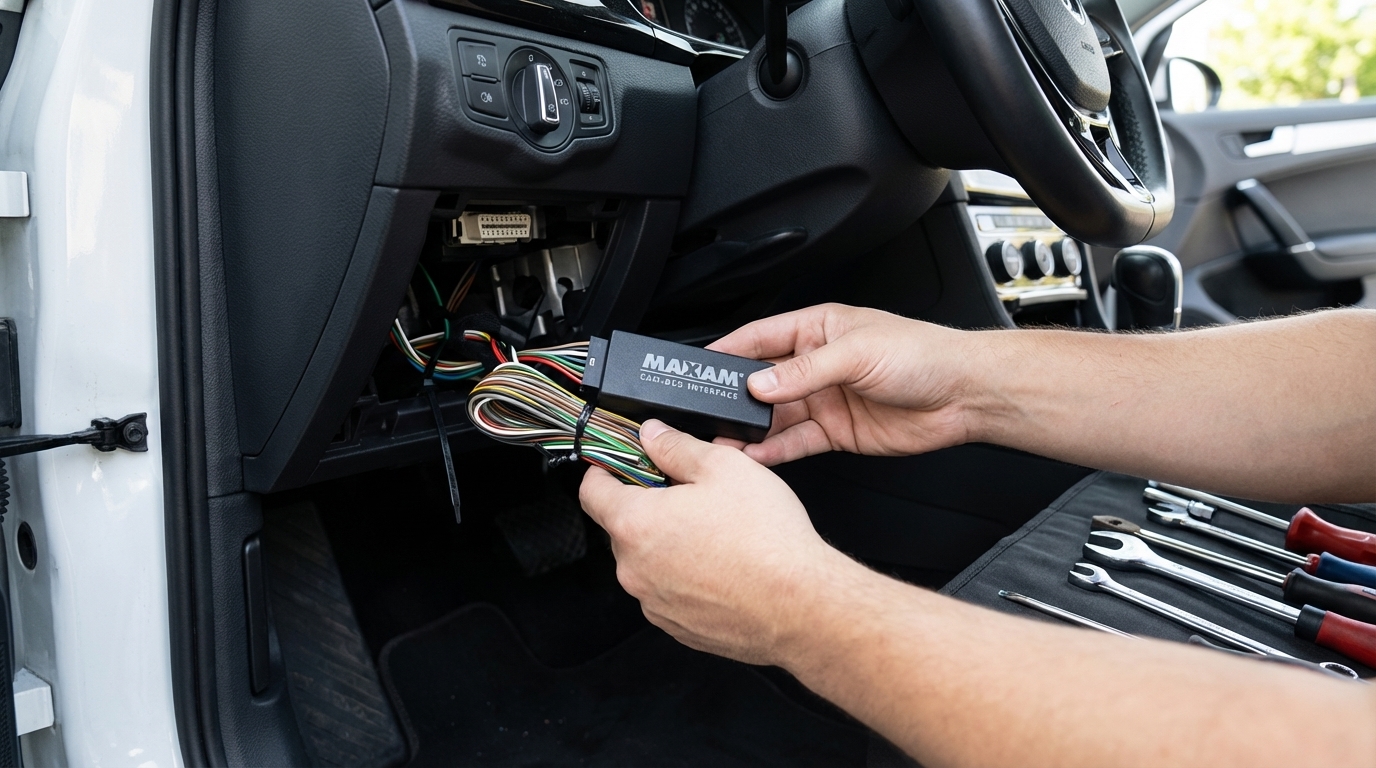
CAN bus installation: 10 pitfalls that save installers time (and prevent malfunctions)
Vehicle electronics installation has become significantly more complex in recent years. Where a few analog signals used to be sufficient, today it increasingly revolves around data communication — with the CAN bus as the backbone. That’s great news for functionality, but it also makes installations more sensitive to errors, misinterpretations, and “ghost issues” that only appear after delivery.
In this blog, we share 10 common pitfalls in CAN bus-related installations — and how to avoid them. Aimed at professionals: installers, technicians, garages, and dealers who want to work quickly and without errors.
Interested in CAN integration solutions? Also check our category:
https://vos.be/en/products/can-bus-interfaces
1) Working on “assumptions” instead of measuring
A classic time-waster: “this must be CAN High” or “this is probably +15.” In modern vehicles, those assumptions are often no longer valid (especially with shared platforms and model updates).
How to avoid it:
-
Always measure power, ground, and signals.
-
Verify behavior: ignition on/off, doors open/closed, reverse engaged, brake signal, etc.
-
Document your measurements (very helpful in case of recurring issues).
2) Selecting the wrong CAN network (there are often several)
Many vehicles have multiple CAN networks (e.g. powertrain, comfort, infotainment, diagnostics). If you tap into the “wrong” network, you’ll get unreliable data — or nothing at all.
Tip:
-
Identify the correct network that contains the required signals (e.g. reverse, door status, ignition status).
-
Use a solution that can match the specific vehicle and be configured correctly.
3) Tapping into an unstable or unsuitable location
Not every point in the wiring harness is equally suitable. Too close to interference sources, poor accessibility, or a point where cable thickness/impedance differs — all can lead to issues.
Best practice:
-
Choose a tapping point that is mechanically stable and accessible.
-
Avoid areas where wiring moves frequently or where moisture/condensation may occur.
4) Poor connections (scotchlocks, bad crimping, poor grounding)
This isn’t just “old school” — it remains one of the biggest causes of intermittent faults. On a CAN bus system, even small contact issues can cause strange symptoms.
Recommended approach:
-
Use soldered connections with proper insulation (heat shrink tubing / self-amalgamating tape).
-
Ensure a reliable ground at a proper grounding point (not “somewhere on the chassis”).
-
Make your connections as if you never want to touch them again.
5) Incorrect interpretation of signals (+15, reverse, speed, RPM)
Some signals behave differently than expected:
-
“Ignition” in modern vehicles may also represent accessory mode or wake-up.
-
Reverse may be available via CAN — but not always on every network or at every location.
Solution:
-
Test under multiple conditions.
-
Verify that your interface provides exactly the signals you need (and in the correct format).
6) Forgetting that software updates can change everything
A dealer software update can alter signal mapping, modules, or CAN behavior. What worked yesterday may respond differently after an update (especially with infotainment and comfort systems).
How to reduce risk:
-
Choose solutions that are updateable.
-
Document installation details and configuration settings for future reference.
7) Listening too much to — or loading — the bus
Some peripheral devices can unnecessarily load the bus or introduce error frames, particularly lower-quality modules or incorrect connections.
Tip:
-
Use high-quality interfaces with low power consumption and proper interference protection.
-
Avoid “experimental” connections if a plug-and-play solution is available.
8) Not considering quiescent current / sleep mode
Vehicles enter sleep mode. An incorrectly connected module can keep the vehicle awake (causing battery drain) — or go to sleep too early, leading to lost functionality.
Checkpoints:
-
Measure quiescent current after installation.
-
Verify behavior after locking the vehicle (5–30 minutes later, depending on the model).
-
Ensure your solution correctly manages wake/sleep behavior.
9) Insufficient shielding and cable routing (EMI/noise)
CAN is relatively robust, but poor routing alongside power lines, bad cable management, or proximity to interference sources can still cause problems.
Best practice:
-
Keep signal and power wiring separated where possible.
-
Secure cables properly; prevent friction, sharp bends, or strain.
-
Follow original cable routing as closely as possible.
10) No documentation or handover (leading to longer repair times)
Most time isn’t lost during the initial installation — but months later when someone asks: “What exactly was done here?”
Make it easier for yourself:
-
Document tapping points, wire colors, settings, modules, and fuses.
-
Add an installation note to the customer or vehicle file whenever possible.
Work faster and more reliably with CAN bus interfaces
For many applications, a good CAN bus interface makes the difference between troubleshooting and connecting correctly from the start. Think of quickly retrieving signals such as ignition, speed, RPM, brake, reverse, and door status.
View our solutions here:
CAN bus interfaces: https://vos.be/en/products/can-bus-interfaces
Do you have a specific case where you’re unsure about signals or connections? Get in touch — we’re happy to think along with you:
Contact: https://vos.be/en/contact
Extra: Technical information & manuals
Are you a registered business customer and need quick access to the right information?
Manuals: https://vos.be/en/manuals
VOS – CAN-bus InterfacesVos Car Electronics, your B2B specialist in electronic and electrical automotive accessories
|